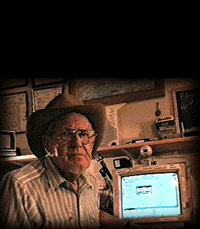
When I was a young kid, I was interested in writing and photography. As a young man in the Army, I had the chance to write, and eventually edit my Corp's newspaper. Even when I went overseas I never had normal jobs. Because of my darkroom skills, I was transferred to the Counter Intelligence Corps. With my camera, I got to see places that the average soldier didn't get to go. So my wartime experiences were very unique in that way.
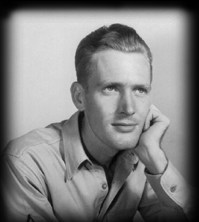
After that, I moved out of the city and became the editor of a small newspaper. Being an editor is always a big ego trip for any writer. Then, I worked at Brookhaven National Laboratory for their paper and on headed their public relations staff. My job was to interpret and communicate scientific discoveries in terms the general public could understand.
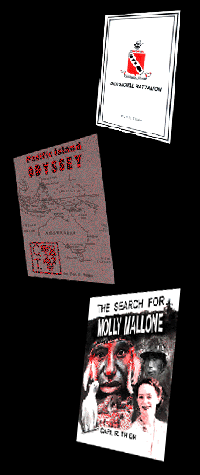
All of my professional life, I had been writing for someone else... to meet their deadline, or to their word limit. After I retired, I started writing for myself. I wrote and self-published my first book when I was seventy-five. It was a history of the first unit I served with in the Army, the 56th Signal Battalion I wrote it for the unit's fiftieth reunion in 1993.
Next, I wrote a personal memoir about my experiences as a soldier and combat photographer in the South Pacific, called Pacific Island Odyssey
I began writing The Search For Molly Mallone after my trip back to the South Pacific. It took two years to write and six months to edit. I think at one point I had a total of six different manuscripts! The final manuscript was submitted to a publisher, and is what you see in the finished book.

